TradeVision vs Competitors comparison analyzing TradingView, Unusual Whales, and BlackBoxStocks. Features, pricing, ROI, risks, and the best trading analytics platform for serious traders.
Introduction
TradeVision vs Competitors is a critical topic for traders who want to move beyond basic charting and alert-driven tools toward institutional-grade market intelligence. In this expert-level strategic report, TradeVision vs Competitors is analyzed through a consulting-style framework to help traders choose the most suitable trading analytics platform in 2025.
This article compares TradeVision with TradingView, Unusual Whales, and BlackBoxStocks, focusing on data depth, workflow efficiency, pricing, ROI potential, and long-term strategic value. The goal of this TradeVision vs Competitors report is to support confident, data-driven buying decisions.
1. Executive Summary 

High-Level Strategic Conclusion
From a strategic standpoint, TradeVision vs Competitors clearly demonstrates that platforms centered on institutional data and probability-driven analysis deliver a more sustainable trading edge than alert-heavy tools.
-
TradeVision provides the strongest balance of options flow, dark pool data, structured screening, and probability analytics.
-
TradingView dominates charting and visualization but lacks proprietary institutional insight.
-
Unusual Whales excels in speed, sentiment, and unusual activity discovery.
-
BlackBoxStocks focuses on real-time alerts and community interaction.
Quick Wins & Failures
-
TradeVision: Best choice for disciplined, data-driven traders
-
TradingView: Limited institutional visibility
-
Unusual Whales: Strong for fast idea generation
-
BlackBoxStocks: High alert noise increases emotional trading risk
TradeVision vs Competitors highlights that analytical clarity, not signal quantity, defines long-term trading performance.
2. Industry Context & Market Overview

Industry Definition
The platforms in this TradeVision vs Competitors comparison operate within the Trading Analytics & Market Intelligence sector, enabling traders to:
-
Analyze stocks and options
-
Track institutional activity
-
Validate trade ideas with data and probability
Market Trends
-
Growing demand for options flow and dark pool transparency
-
Shift from signal-selling to decision-support platforms
-
Increasing sophistication among retail and semi-professional traders
User Pain Points
-
Information overload
-
Overtrading caused by alerts
-
Lack of insight into large-money behavior
3. Platform Profiles
3.1 TradeVision
-
Business Model: Subscription-based SaaS
-
Target Users: Active traders, options traders, professionals
-
Core Positioning: Institutional-grade trading intelligence
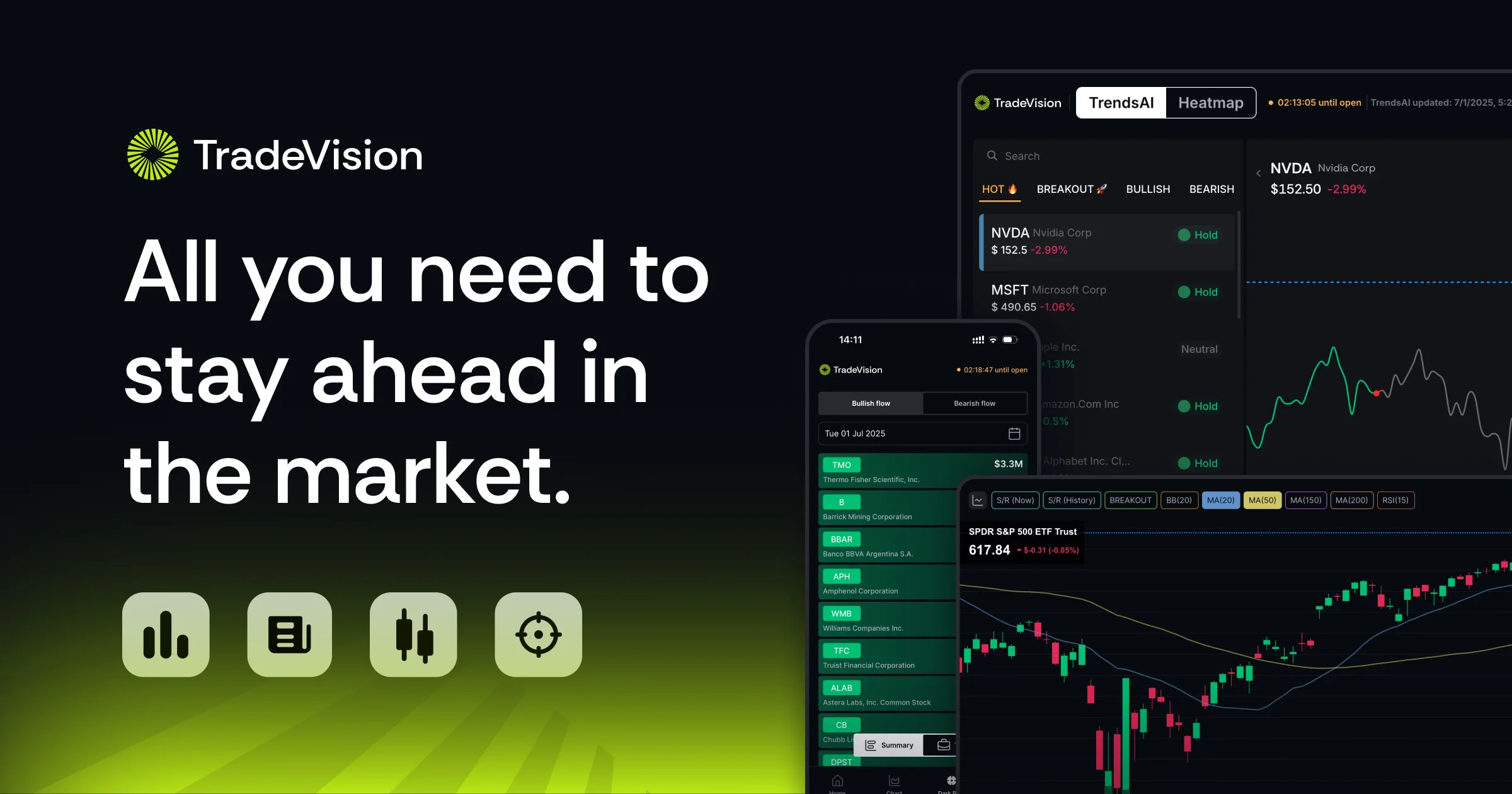
TradeVision positions itself as a decision-support system, not a signal generator. Its value lies in contextual market understanding through options flow, dark pool prints, block trades, and probability-based analytics.
3.2 TradingView
-
Business Model: Freemium + Pro subscriptions
-
Target Users: Global retail traders and analysts
-
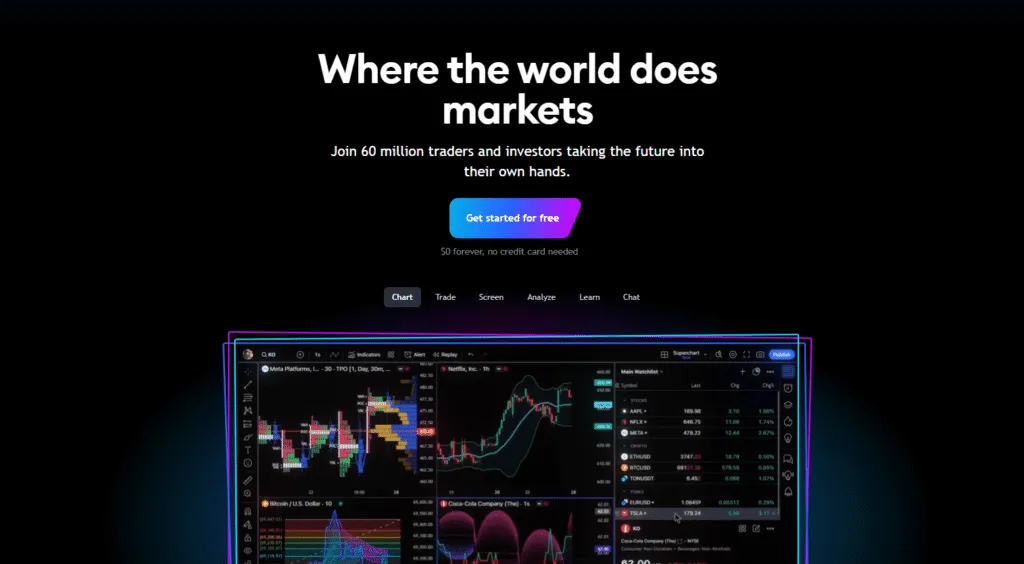
Core Positioning: Best-in-class charting and technical analysis
TradingView is best viewed as a complementary tool rather than a replacement for institutional analytics.
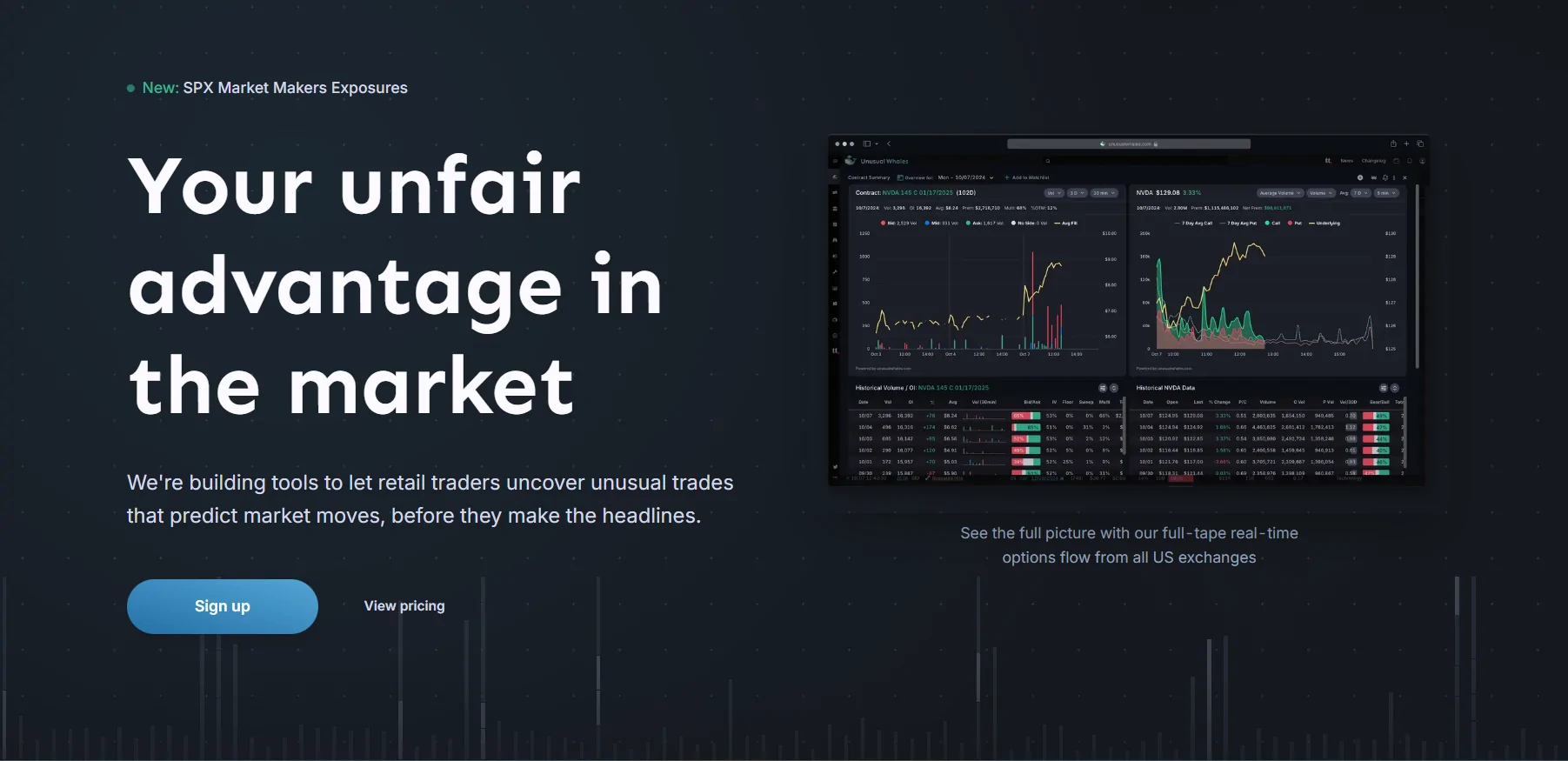
3.3 Unusual Whales
-
Business Model: Subscription-based
-
Target Users: Retail options traders
-
Core Positioning: Unusual options activity and sentiment
Unusual Whales emphasizes speed and discovery, which contrasts with the structured analysis approach seen in TradeVision vs Competitors.
3.4 BlackBoxStocks
-
Business Model: Subscription + Discord community
-
Target Users: Short-term and momentum traders
-
Core Positioning: Alerts and community-driven trading
BlackBoxStocks appeals to traders who prioritize immediacy over deep analysis.
4. High-Level Comparison Table
| Dimension | TradeVision | TradingView | Unusual Whales | BlackBoxStocks |
|---|---|---|---|---|
| Options Flow |  Advanced Advanced |
 None None |
Strong |
Moderate |
| Dark Pool Data | Yes |
No |
Yes |
Yes |
| Charting |  Basic Basic |
Best-in-class |
Basic |
Basic |
| Alerts | Limited |
Indicator-based |
Yes |
Heavy |
| Ideal Skill Level | Advanced | All levels | Intermediate | Beginner–Intermediate |
This table reinforces the core thesis of TradeVision vs Competitors: depth beats noise.
5. Detailed Audit by Key Dimensions
5.1 Features & Technology

-
TradeVision: Institutional datasets, probability tools, structured filters
-
TradingView: Technical indicators and Pine Script
-
Unusual Whales: News-linked options flow
-
BlackBoxStocks: Alert infrastructure
Winner in TradeVision vs Competitors: TradeVision
5.2 User Experience & Workflow
TradeVision vs Competitors reveals two UX philosophies:
-
TradeVision: analysis-first workflows
-
TradingView: visualization and customization
5.3 Pricing & Cost Structure
-
TradeVision: Mid-to-premium pricing aligned with data depth
-
TradingView: Low-cost entry via freemium
-
Unusual Whales: Mid-range subscription
-
BlackBoxStocks: Premium pricing for alerts
From a value perspective, TradeVision vs Competitors favors platforms that reduce poor trades rather than subscription cost.
5.4 Performance & Reliability
All platforms show solid uptime, but TradeVision vs Competitors highlights TradeVision and TradingView as the most stable under heavy data loads.
5.5 Scalability & Business Readiness
For professional traders, TradeVision vs Competitors clearly favors TradeVision due to structured workflows and institutional data scalability.
5.6 Security & Compliance
All platforms follow standard SaaS security practices and do not execute trades, lowering regulatory exposure.
6. Pairwise Strategic Comparisons
TradeVision vs TradingView
In TradeVision vs Competitors, this comparison shows that TradingView excels at charting, while TradeVision dominates institutional insight.
TradeVision vs Unusual Whales
TradeVision vs Competitors reveals that structured analysis outperforms speed for systematic traders.
TradeVision vs BlackBoxStocks
Within TradeVision vs Competitors, TradeVision reduces alert dependency and emotional trading.
7. Scoring & Evaluation Matrix
| Criteria | TradeVision | TradingView | Unusual Whales | BlackBoxStocks |
|---|---|---|---|---|
| Value for Money | 8.5 | 9 | 8 | 7 |
| Usability | 8 | 9.5 | 8 | 7 |
| Reliability | 9 | 9 | 8 | 7.5 |
| Feature Strength | 9.5 | 8 | 8.5 | 7 |
| ROI Potential | 9 | 7.5 | 8 | 6.5 |
| Risk Level | Low | Low | Medium | Medium |
This matrix reinforces the conclusions of TradeVision vs Competitors.
8. Financial & ROI Analysis
When evaluating total cost of ownership, TradeVision vs Competitors shows that higher-quality data often delivers faster ROI by reducing false trades, overtrading, and emotional execution.
9. Buyer Decision Framework
For disciplined traders, TradeVision vs Competitors acts as a practical framework to align platform choice with trading style, experience level, and risk tolerance.
10. Risk & Limitation Audit
-
TradeVision: Learning curve for beginners
-
TradingView: No native institutional data
-
Unusual Whales: Overtrading risk
-
BlackBoxStocks: Signal dependency
These risks are clearly outlined within TradeVision vs Competitors to support informed decisions.
11. Final Strategic Verdict
Best Overall: TradeVision
Best Budget: TradingView
Best Retail Flow Tool: Unusual Whales
Best Community Alerts: BlackBoxStocks
Overall, TradeVision vs Competitors confirms that platforms built around institutional insight provide a stronger long-term trading edge.
12. Actionable Recommendations & CTA
If you are a serious trader seeking institutional-grade analytics without alert noise, TradeVision stands out in the TradeVision vs Competitors landscape.
 For more expert analyses like this TradeVision vs Competitors report, visit
Toppropreviews.Com to explore in-depth trading platform reviews, comparisons, and strategic guides.